Why did I write this post?
To set the scene, I’ve got an accounting background, love learning about personal finance and think that I am “ok” at learning about financial concepts. However I found it very hard to find a single source that writes down or explains succinctly what you can do to invest for your children and what you need to begin this journey.
So, this is my way of capturing my journey and learnings so that you may benefit from this and have at least one less excuse before you begin investing for your children.
One day they will thank you for it…. Enjoy the read…
Disclaimer
This post is not financial advice. It is written as a summary of my journey and learnings along the way. Please do your own research and/or consult with your relevant investment / tax advisor before making any investment decisions as everyone’s situation may be different from my own. This post was written as an aide-mémoire to myself which I also hope informs/educates other parents to at the very least take action to begin investing on behalf of their children.
Content / Index
- My Journey & Learnings
- Help from the UK Government
- What is Financial Success
- My approach
- What am I investing in and why
- Teaching your children about money
- Next steps
Key Points
- UK Government gives you £400 per year towards childcare
- Invest up to £9,000 per year per child in a Junior ISA
- Hargreaves Lansdown has no transaction fees on Junior ISAs (I’ve tried other platforms)
- Complete a W8-BEN form to invest in US based shares
- Gift up to £3,000 per year tax free (reduces inheritance tax)
- Use the power of compounding!
My Journey & Learnings
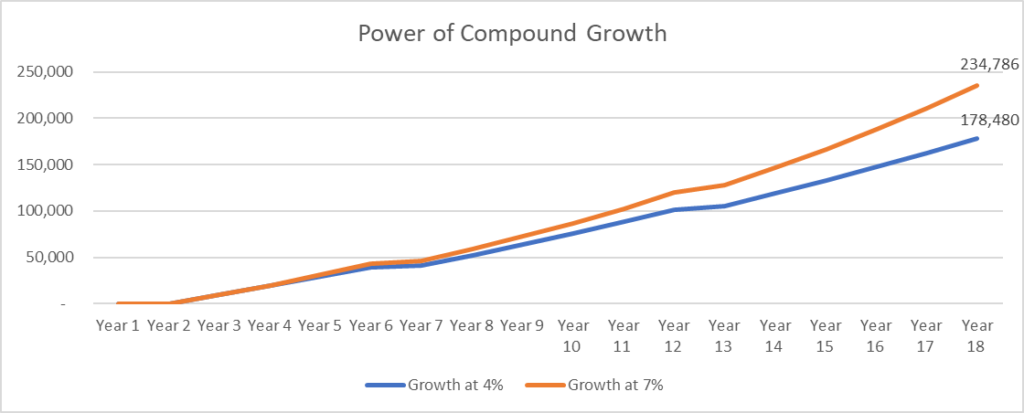
I’ve recently heard a quote that “Parenting is not hard, good parenting is“. This certainly feels true when navigating the endless web of making the right decisions to set your children up for financial success. Yes, I’m talking about investing on their behalf from an early age to ensure they benefit from the 8th wonder of the world as Einstein called Compounding.
This post is a summary of my journey navigating the process of setting my children up for financial success. But it probable means we need to define what “setting up for financial success” means, or at least for me.
Help from the UK Government
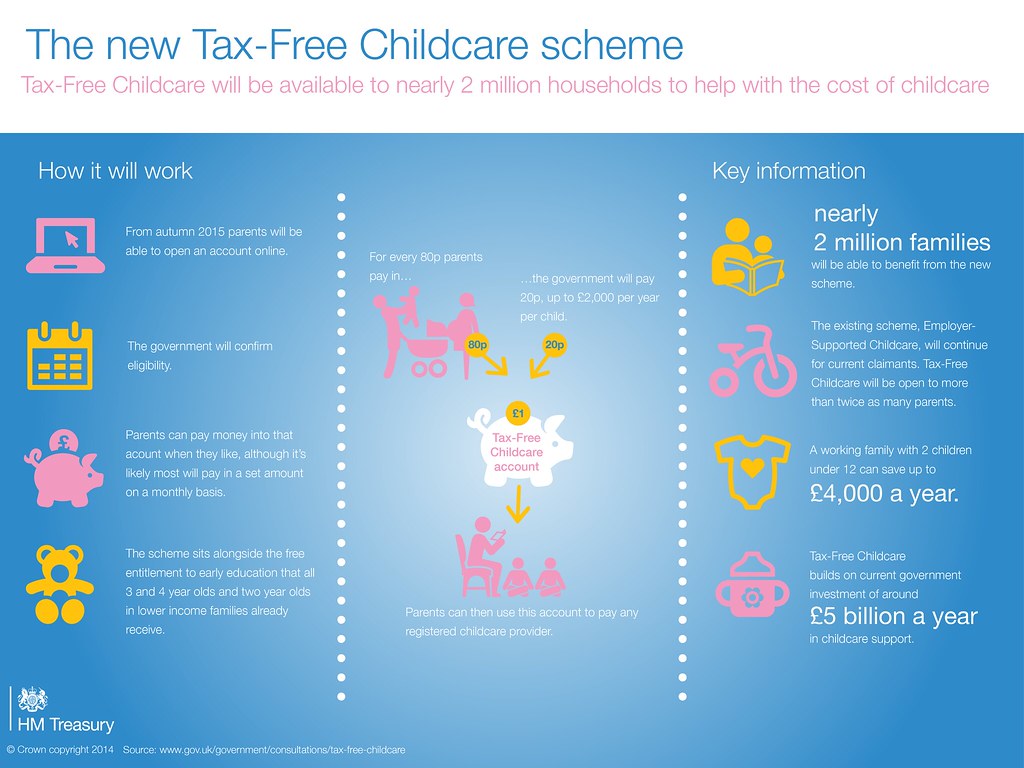
Yes, for a little bit of admin and time, you can automate a part of your nursery fees to be paid directly to your nursery via HMRC.
(Note, you have to earn less than £100,000 annually for benefit from this. This is Gross Taxable Earnings as per your payslip. If you’re lucky enough to earn more than £100k there are ways to reduce your taxable earnings to still qualify for this benefit, most common is to increase your pension contributions. I’ll write a post soon about why keeping your gross taxable earnings under £100k is a good thing.)
You can contribute up to £500 per quarter and the Government will then top it up with £100. That means you have £600 to use over 3 months (£200 per month) paid directly to your nursery.
How do you take advantage of this “free money” from the UK Government?
- Register on Gov.uk (link) for Tax-Free Childcare
- Set up your direct debit (£500 every 3 months)
- When you do put your child in nursery, get their code
- Link them to your Tax-Free Childcare account
- Set up regular payments (based on your balance)
INVESTING
What is Financial Success
My approach to build this foundation
It began with finding the right platform to use for investing. I tried the platform I use for our (adult) Stocks & Shares ISAs – AJ Bell YouInvest – with the rationale that it will allow me to view all of our investments through linked accounts in a single platform.
When I decided to use AJ Bell YouInvest due to the low transaction fees for (adult) Stocks & Shares ISAs. It’s been a great platform to use, easy to navigate, and everything you might expect from an investment platform.
The frustration came when I was revisiting my research for Junior ISAs for my second child and learned there was another platform – Hargreaves Lansdown (HL) – who don’t charge any transaction fees for Junior ISAs. The impact of completely eliminating transaction costs (there are still some taxes that may be charged) should not be underestimated. It will have a direct impact on increasing your returns!
Once you’ve registered for a new Junior ISA online, the next step should be to sign and then send off the W8-BEN form on your platform which will allow you to trade in US-based stocks (e.g. Apple, Tesla, Google, Microsoft, NVIDIA, Berkshire Hathaway, etc). Then your setup should be complete and you can start investing.
But before you start, take some time to discuss and agree with your partner what the investment rationale will be for your child(ren). This is important, as you don’t want to chase each and every hype / fad when investing on behalf of your children. It will provide you with clear ground rules / boundaries of what to invest in given a 16-18year horison (before you transition this to their control.
What am I investing in and rationale
The rationale for my selection below is to build long-term (10 to 20-year) returns for my children based on dividends and capital growth. This should be augmented by diversifying across different currencies, markets and assets.
To that effect – I’ve invested in the following: (in part driven by the exact fund available on the platform for the J-ISA that will address the theme)
LON:VUKE: Vanguard Funds Plc FTSE 100 UCITS ETF GBP (Morningstar link)
Provide exposure to the top 100 UK-based businesses. This is a low-risk ETF based on blue-chip companies, providing stable growth and dividend income. Historically the FTSE100 has grown at c.5% per year.
LON:VMID: Vanguard Funds plc FTSE 250 UCITS ETF (Morningstar link)
Provide exposure to the top 250 UK-based businesses. This is a low-risk ETF based on blue-chip companies, providing stable growth and dividend income. Slightly higher risk/volatility than the FTSE 100.
LON:VUAG: Vanguard Funds Plc S&P 500 UCITS ETF USD ACC (GBP) (Morningstar link)
Provide exposure to the top 500 US-based businesses. This is a medium risk ETF based on blue-chip companies from across the pond. Historically the S&P500 has grown at c.9% per year.
LON:IIND: iShares IV plc MSCI India UCITS ETF USD Acc (GBP) (Morningstar link)
Provide exposure to the top India-based businesses. This is a long-term play with the fast growth expected in India and the Indian middle class which will drive up spend and then economic growth. This is seen as the more stable of the BRICS / emerging markets.
As I invest in other funds or companies I will update the list above.
Teaching your children about money
How early can you start to bring money into the conversation / education of your children?
That is such a personal question and everyone will have an opinion. But if you want to start your children on their journey of learning about money and finance, then I’d highly recommend Will Rainey from Blue Tree Savings.

They have various fun ways of engaging your children in money / finance, including:
- Books for Adults
- Books for Children
- Board Games for the whole Family
Will’s most famous book is Grandpa’s Fortune Fables which is a great read as a bed time story.

Next Steps - Getting Started
As a quick summary, here’s what I think you may need to begin investing on behalf of your children:
Block 1: Basic Documents (pregnant to 3 months old)
- Birth Certificate
- National Insurance Number for your child
- Passport
- Budget (how much will you contribute each month / year)
- Investment thesis (what will you invest in, for how long, and why)
- Investment thesis signed off / agreed to by your husband / wife / partner
Block 2: Tax Free Childcare (born to 3 months old)
- Register on Gov.uk (link) for Tax-Free Childcare
- Set up your direct debit (£500 every 3 months)
- When you do put your child in nursery, get their code
- Link them to your Tax-Free Childcare account
- Set up regular payments (based on your balance)
Block 3: Junior ISA (born to 9 months old)
- Find a suitable investment platform, I use Hargreaves Landsdown
- Open your account and complete W8-BEN form for US based investments
- Decide if you will fund the account monthly or in a lump sum to maximise the use of your annual allowance (£9,000 in 2024/25)
- Invest based on your investment thesis
- Set up regular investments / auto-reinvests (for dividends) to automate as much of this as possible
Block 4: Education (from 3 years old)
- Find as many books / games / things to do to build their confidence with money
- Get them involved from as early as possible to help them understand money, saving, and compounding
- Help them understand value (when you deliver value people pay you more)